I thought I had lost Meredith Calhoun forever. For eleven years, I carried the memory of a woman I once loved but never truly stopped missing. Life moved forward, at least from the outside. I became the director of St. Augustine General Hospital, built a respected career, and became the kind of person others trusted during their worst moments. Every day, I walked through hospital corridors making decisions that affected hundreds of lives, solving problems, and staying calm when everyone else was afraid. People saw success when they looked at me, but they never saw the unanswered question I carried quietly for more than a decade: what happened to Meredith?
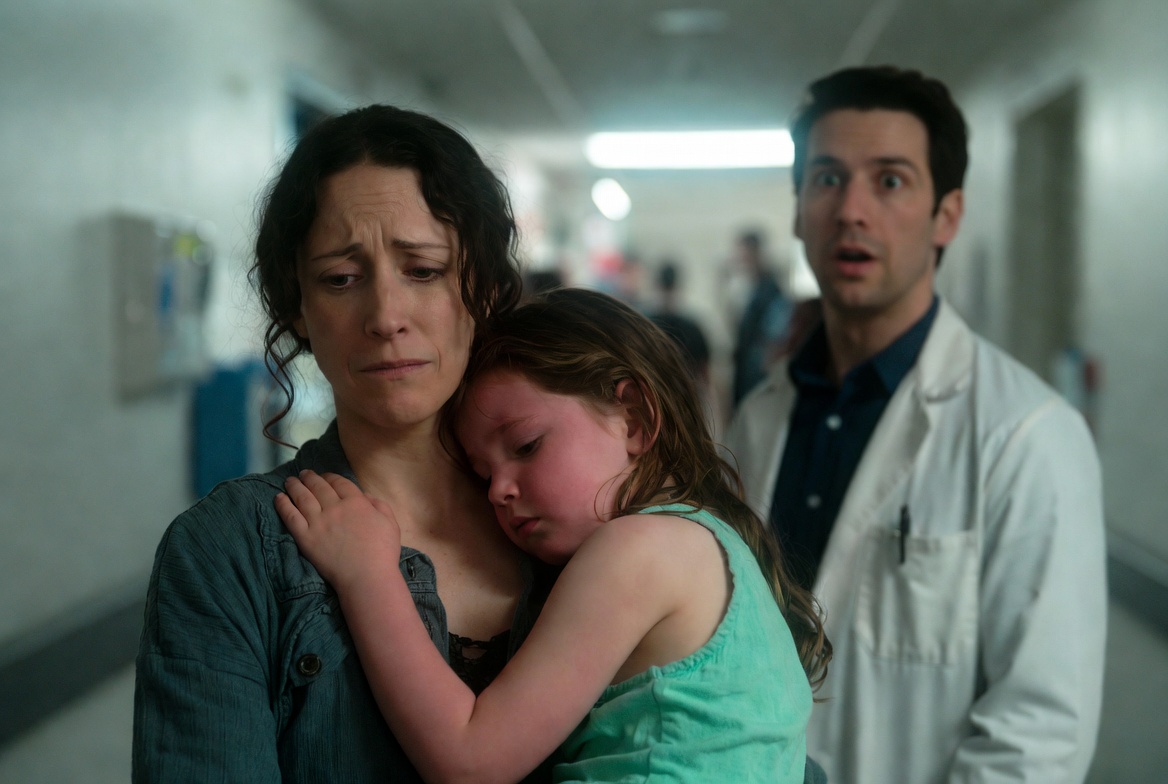
The answer came on an ordinary morning when I was walking through the third-floor corridor reviewing patient files. I was listening to a resident explain a medical case when a familiar voice stopped me completely. “I’m sorry. I just need five minutes with someone. My daughter’s fever won’t go down.” I knew that voice before I even turned around. Meredith was standing at the nurse’s station holding a little girl against her shoulder. She was wearing hospital scrubs that clearly were not hers, an old gray hoodie over them, and exhaustion written across her face. The little girl’s cheeks were red from fever, and Meredith looked like someone who had been carrying every responsibility alone for far too long.
For a moment, I had the chance to walk away. I could have kept moving toward my office and pretended that the past was something that belonged behind me. But I couldn’t. I said her name, and when she turned around, I watched eleven years of memories return in a single second. “Nathaniel.” She said my name softly, almost like she was surprised it still existed in her life. I looked at the child in her arms and immediately asked what was wrong. She told me her daughter had a high fever since the previous night, that urgent care was overwhelmed, and that she did not know where else to go. The fear in her voice was the same fear I had seen in thousands of parents before, but this time it was different because it was Meredith standing in front of me.

I took her daughter into an examination room and focused on what I knew how to do. Medicine was easier than emotions. I checked the child, ordered tests, lowered her fever, and stayed until we knew what was happening. Her name was Junie, short for June, and thankfully it was strep, nothing more dangerous. When the results came back and Meredith finally relaxed, I allowed myself to look at her properly. She was not the same woman I remembered from university. Life had changed her. There were tired lines around her eyes, her hands looked worn from years of hard work, and there was a strength in her that came from surviving things she never talked about.
“You work here?” she asked quietly.
“I run this department,” I answered.
She looked at my white coat, my identification badge, and the way everyone around me naturally followed my instructions. She seemed surprised, but what hurt was not the surprise. It was the realization that she had missed an entire chapter of my life. “Of course you do,” she whispered. “You always said you would.” I remembered saying those words when we were nineteen, lying on the grass behind the university library. I told her I wanted to run a hospital someday. She laughed and called me ambitious, but she believed in me before anyone else did.
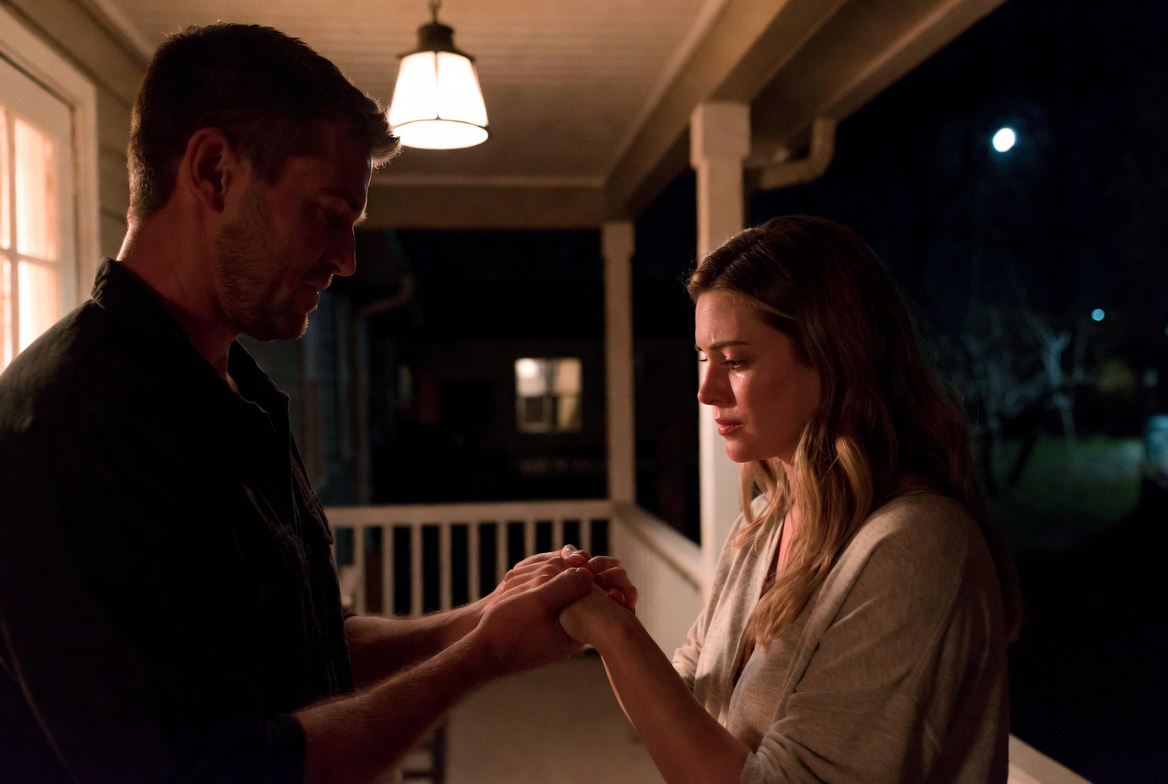
After Junie was stable, I walked them to the pharmacy and paid for the medication before Meredith could stop me. The moment we reached the parking lot, she looked at me with a mixture of gratitude and frustration. “I don’t need you to do that,” she said. I looked at her and replied honestly, “I know you don’t need me to. I wanted to.” She was quiet for a moment before asking the question I never expected to hear. “Why did you stop writing?” My heart tightened because I had spent years wondering why she stopped answering me.
I told her the truth. I had written for months after we separated, but after receiving no response, I assumed she had moved on. I thought I was the only one holding on to something that was already gone. Then she looked at me with confusion and said something that changed everything: “I never got those letters.” We stood there in silence, realizing that eleven years had passed because of something neither of us understood. Somewhere between two cities, something important had been lost. A letter. A message. A chance to explain. And both of us had spent years grieving something that was never truly over.
I thought about Meredith for days after that. I told myself it was because I was worried about Junie, because I wanted to make sure they were okay. But I knew the truth. Seeing her again had reopened a part of me that I thought had already healed. Four days later, she called. It was not about the hospital. It was about her apartment building being sold and her having only thirty days to find somewhere else to live. I could hear how difficult it was for her to ask for help because Meredith had always been the person who carried everything alone.
“I have a guest house,” I told her.
She immediately refused. She said she could not accept that kind of help. I understood why. Meredith had never wanted to owe anyone anything. So I told her the truth: it was not charity. I had an empty place sitting unused, and she had a daughter who needed stability. “Let me be useful for once instead of just sorry,” I told her. After two days of thinking, she finally agreed.
The guest house changed everything. It was supposed to be temporary, just a place for Meredith and Junie to stay until they found something permanent. But slowly, without either of us planning it, it became home. Meredith cooked dinner most nights because taking care of people was simply part of who she was. Junie filled the quiet spaces with laughter, questions, and endless facts about animals that I never asked for but somehow enjoyed hearing. I found myself changing my schedule so I could be home before bedtime, something I had not done in years.
Meredith found a stable job a few weeks later. When she came home with the news, she was happier than I had seen her in years. She told me she finally felt like she was standing on her own again. I hugged her without thinking, and for a moment neither of us moved. “You did that,” I told her. “Not me.” She smiled and quietly replied, “Maybe. But you gave me a place where I could.”
For the first time in years, I believed we might have a second chance.
Then Curtis came back.
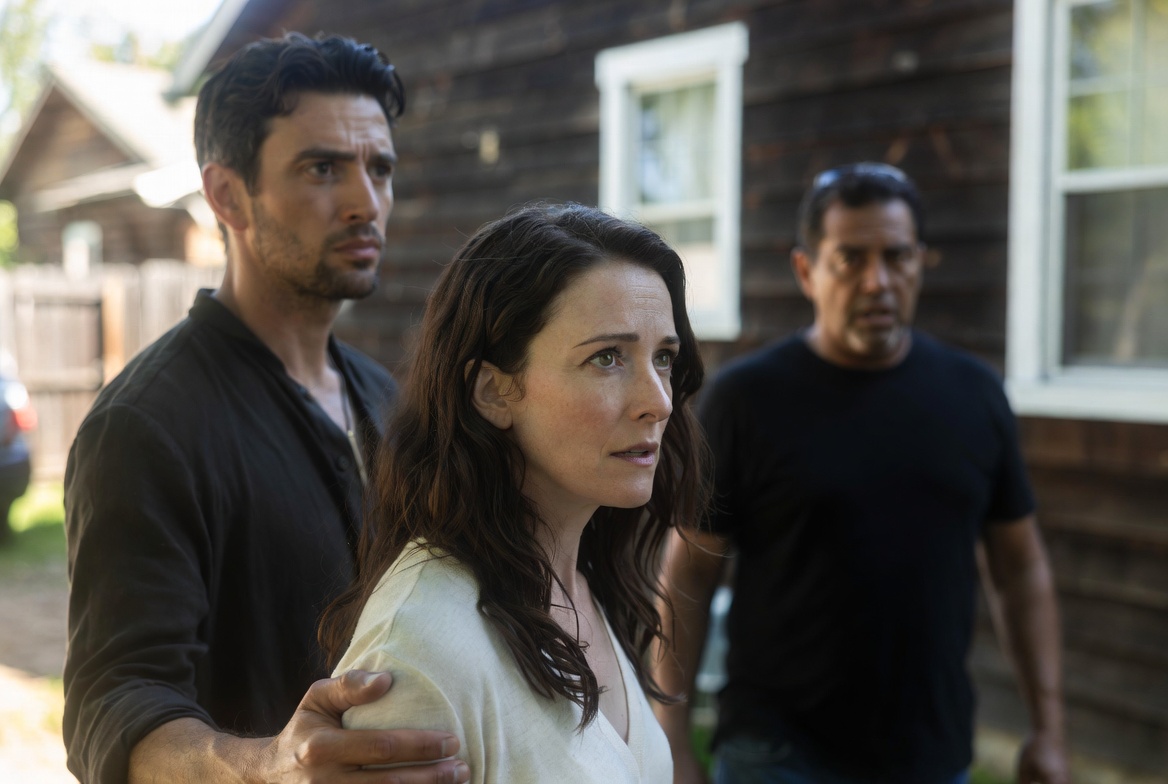
Curtis was Meredith’s ex-husband and Junie’s biological father. He appeared at the property unexpectedly, acting as if he still had control over Meredith’s life. He threatened her with custody battles, demanded money, and tried to convince her that he could take Junie away. Meredith did not tell me immediately. She hid it because she believed she was protecting me from her problems, the same way she had spent years protecting everyone else.
I discovered the truth when Junie became sick again and a threatening message appeared on Meredith’s phone. Curtis had been demanding money and using fear to control her. When I asked why she kept it from me, she finally broke down. “I didn’t want to bring this into your life,” she whispered. I held her hand and told her the truth she had spent years avoiding: “Meredith, you don’t have to carry everything alone anymore.”
The next morning, we contacted a lawyer. We documented every message, every threat, and every attempt Curtis made to intimidate her. For years, he had relied on fear because fear had always worked. But this time Meredith was not alone. With proper legal support, Curtis quickly backed down when he realized his threats would not work anymore.
That night, Meredith sat on the porch steps looking at the trees behind the house. “I kept waiting for something bad to happen,” she admitted. “Every time something good happened, I thought it was only a matter of time before I lost it.” I sat beside her and told her something I wanted her to believe. “I spent my whole life building a career around helping people. I’m not going to disappear when you need help.” For the first time since she returned to my life, Meredith smiled without fear.
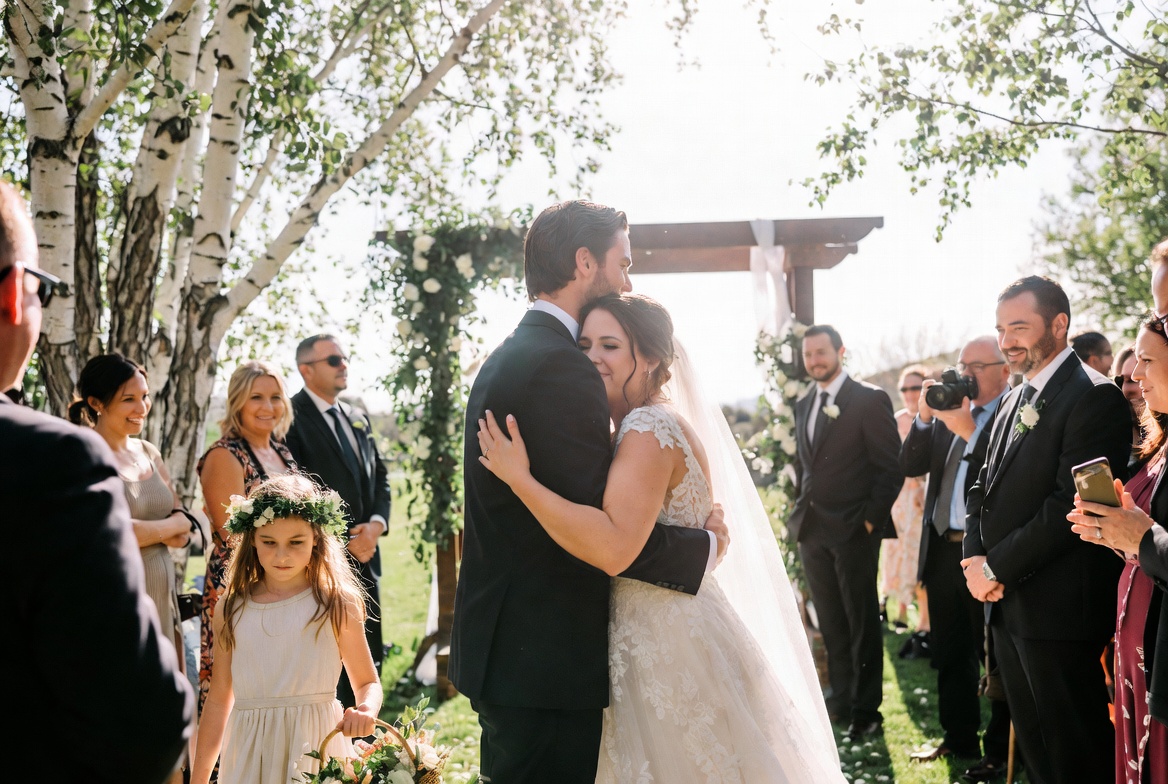
The following spring, I married Meredith beneath the birch trees behind my home. Junie walked down the aisle carrying flowers with the seriousness of someone performing an important mission. Before the wedding, she asked me a question that I will never forget. “Can I call you Dad now?” I looked at her and realized family was not always created by blood. Sometimes it was created by the people who choose to stay.
When Meredith reached me that day, I held her hands and remembered everything we had lost and everything we had found again. I told her I used to think we lost each other because of bad luck, but maybe we simply needed time to become the people we were meant to be. She told me she spent years believing strength meant doing everything alone, and I reminded her that letting someone love you was never weakness.
Looking back, I still cannot believe how close we came to never finding each other again. Eleven years of silence. One missed connection. One sick child walking into a hospital. That was all it took to change our entire story.
Sometimes the people we lose are not truly gone.
Sometimes life brings them back when we are finally ready to understand why they mattered all along.