For eleven years, I believed I understood what made a great leader. My name is Connor Shelby, CEO of Halcyon Capital Partners, and I built my entire career around discipline, efficiency, and control. I believed emotions had no place in serious decisions, that standards had to be strict, and that successful companies were built by people who could handle pressure without hesitation. I had taken Halcyon from a small investment firm into one of the largest independent capital management companies in the country, and people respected me because I always delivered results. But what nobody saw was that somewhere along the way, I had started confusing being in control with actually leading. I thought a leader’s job was to push people forward, not realizing that sometimes the most important thing a leader can do is stop and notice the people who are quietly falling behind.

The day everything began to change started like any other workday. I was on my way to the office in my usual black Audi, following a schedule that had been planned down to the minute, when a delivery truck accident blocked the road and destroyed my carefully arranged morning. I had a board call, executive meetings, and no room for delays, so I told my driver I would walk the rest of the way. The February cold in Toronto was brutal, cutting through my coat as I moved quickly down the street, focused only on arriving on time. Then I heard the sound of something hitting the pavement and stopped. An elderly man was standing near the intersection, struggling to pick up his cane while hundreds of people walked past him without noticing. Normally, I would have kept going. Not because I was heartless, but because I had spent years convincing myself that everything had a system and every problem belonged to someone else’s responsibility. But that morning, I turned around, picked up his cane, and handed it back to him.
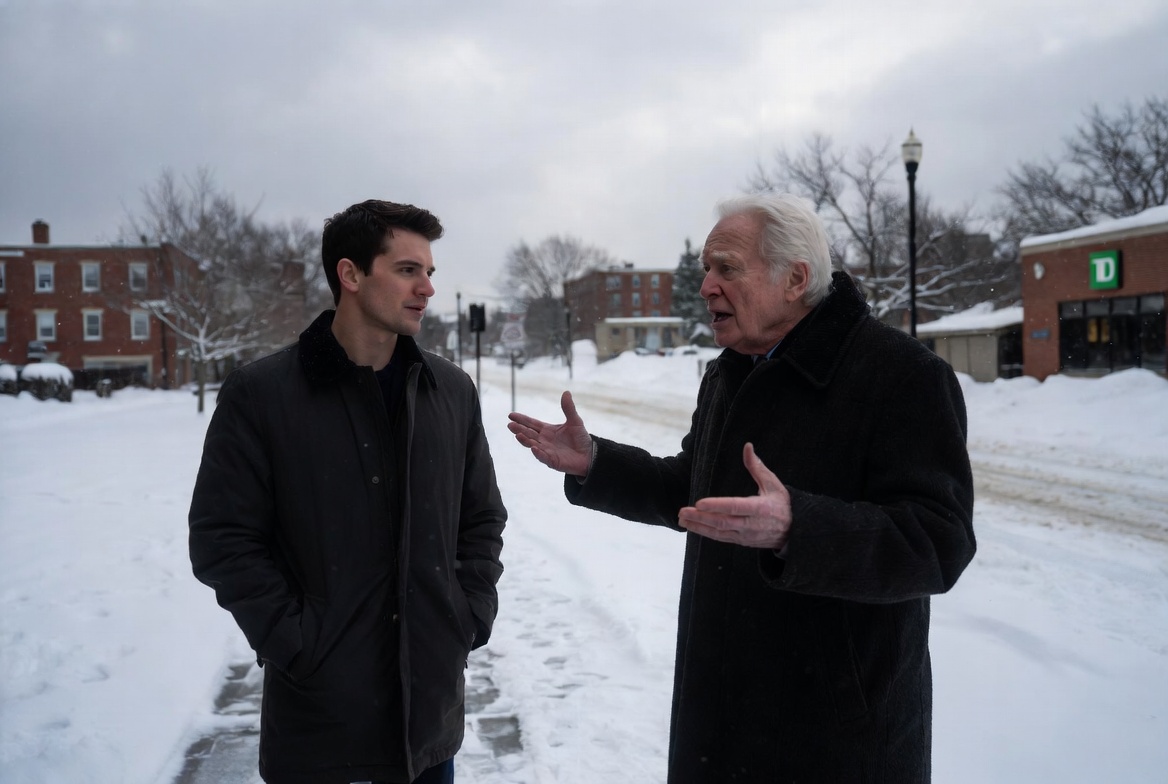
The man thanked me and told me something that stayed with me: “I used to be able to do that myself.” He did not say it with sadness or anger. He said it like a simple fact about life changing over time. I asked if he needed help reaching his destination, and he told me he was going to the TD building to surprise his daughter with breakfast because she worked too much and often forgot to eat. I decided to walk with him, even though I did not have to. That was what felt strange. Almost everything I had done for years was because I had to: meetings, decisions, responsibilities, expectations. Walking beside a stranger in freezing weather served no business purpose, but somehow it felt more meaningful than most things on my calendar. His name was Wendell Price, and when he told me who he was, I immediately recognized him. He was a legendary businessman who had built a major infrastructure company from nothing. But standing beside him on that sidewalk, I did not see a powerful executive. I saw an eighty-one-year-old father who simply wanted to bring breakfast to his daughter.
Before we parted ways, Wendell told me something about leadership that I had never forgotten. He told me about an employee who had worked for him for nineteen years but once left early to take his son to a hospital appointment. At the time, Wendell documented the incident because he believed consistency and rules mattered more than personal circumstances. Years later, he realized he had called it principle because that sounded better than control. Those words stayed with me because I recognized myself in them. I had done the same thing. I had judged people by schedules, deadlines, and performance numbers without considering the lives happening outside the office. That same morning, after returning to work, I met with Bridget Fournier, one of my most talented executives, and discovered that she had been quietly considering leaving the company. She had received another offer, but what surprised me was not that she wanted to leave. It was why.

Bridget explained that she had spent fourteen months developing a growth strategy for Halcyon, a plan that could expand our business into new markets and create a stronger future for the company. But she had never seriously presented it because she had watched what happened to another employee who spent weeks preparing a major proposal only to have it dismissed in minutes. He eventually left, and everyone moved on as if nothing happened. Listening to Bridget, I realized the problem was not that my company lacked talented people. The problem was that we had created an environment where talented people stopped believing their voices mattered. Employees were not leaving because they lacked ambition. They were leaving because they felt invisible. I had spent years analyzing profits, investments, and market movements, yet I had failed to measure something far more important: how many people inside my company had stopped trying because they no longer felt heard.

After that day, I began changing the way I led. I did not make dramatic announcements or pretend one conversation could transform an entire organization overnight. Instead, I started with small decisions. We created better ways for employees to share ideas, reviewed workloads more honestly, encouraged people to take their vacation time, and changed the way managers approached their teams. I started having conversations without immediately searching for the next objective. I started noticing the employees who always stayed late, the people who never complained, and the talented individuals who had learned to remain silent because speaking up felt pointless. I also began walking to work more often, leaving the car behind and allowing myself to experience the city instead of rushing through it. For years, I believed speed was a sign of strength. I eventually realized that sometimes slowing down is what allows you to see what you were missing.

Months later, I returned to the same intersection where I first met Wendell. The city was still cold, people were still rushing, and everyone was still chasing deadlines and responsibilities. But I was no longer the same person who had walked through those streets that morning. I had learned that leadership was not about making everyone move at my pace. It was about understanding that every person carried a story, a struggle, and a life that never appeared on a spreadsheet. A company is not built only by financial results, strategies, or performance targets. It is built by people who need recognition, trust, and the feeling that their efforts matter. That morning, I thought I was helping an old man pick up his cane. I did not realize he was helping me recover something I had lost years earlier: the ability to truly see the people around me.