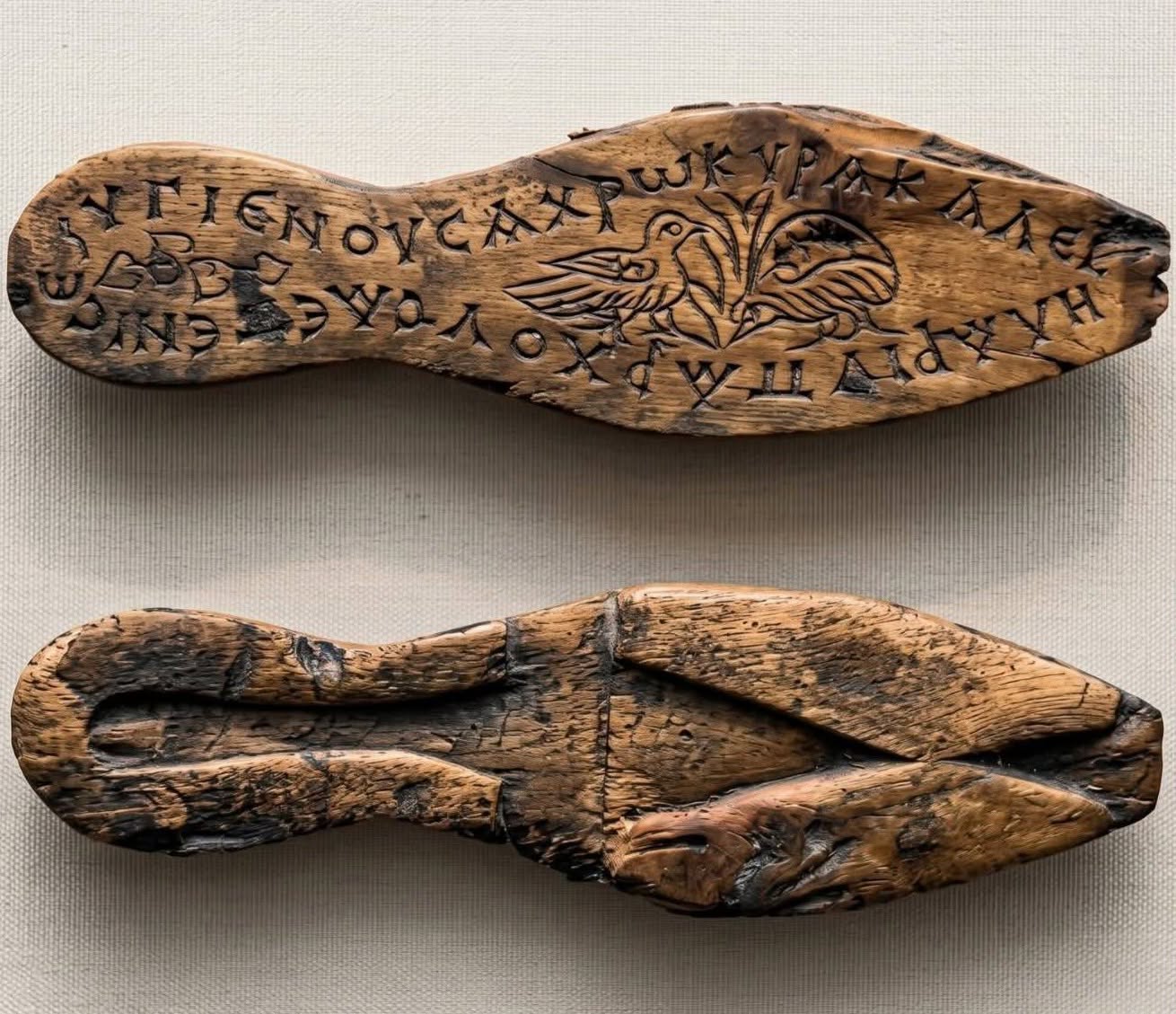
Beneath the crowded streets of modern Istanbul lies a forgotten world that once belonged to one of history’s greatest cities. During a massive excavation project for the Marmaray undersea railway tunnel, archaeologists uncovered thousands of objects hidden beneath the ground for centuries. Among shipwrecks, skeletons, tools, and everyday items from the ancient past, one discovery captured special attention: a simple pair of women’s sandals carrying a deeply personal message.
The sandals were not made from gold, silver, or precious materials. They were not the crown of a ruler or the weapon of a warrior. Instead, they were an ordinary object that once belonged to a woman walking through the streets of Byzantine Constantinople. Yet the words carved into them transformed them into one of the most emotional discoveries from the excavation.
Written in Greek, the inscription on the sandals reads:
“Use in health, lady, wear in beauty and happiness.”
Unlike many ancient inscriptions created to honor emperors, gods, or military victories, this message was private and intimate. It was a wish of care, beauty, and well-being directed toward the woman who would wear them.
The discovery took place during the Marmaray railway project, one of the largest infrastructure projects in Istanbul’s modern history. The tunnel was designed to connect the European and Asian sides of the city beneath the Bosphorus Strait. Before construction could continue, archaeologists were required to investigate the area because Istanbul sits directly above layers of thousands of years of human history.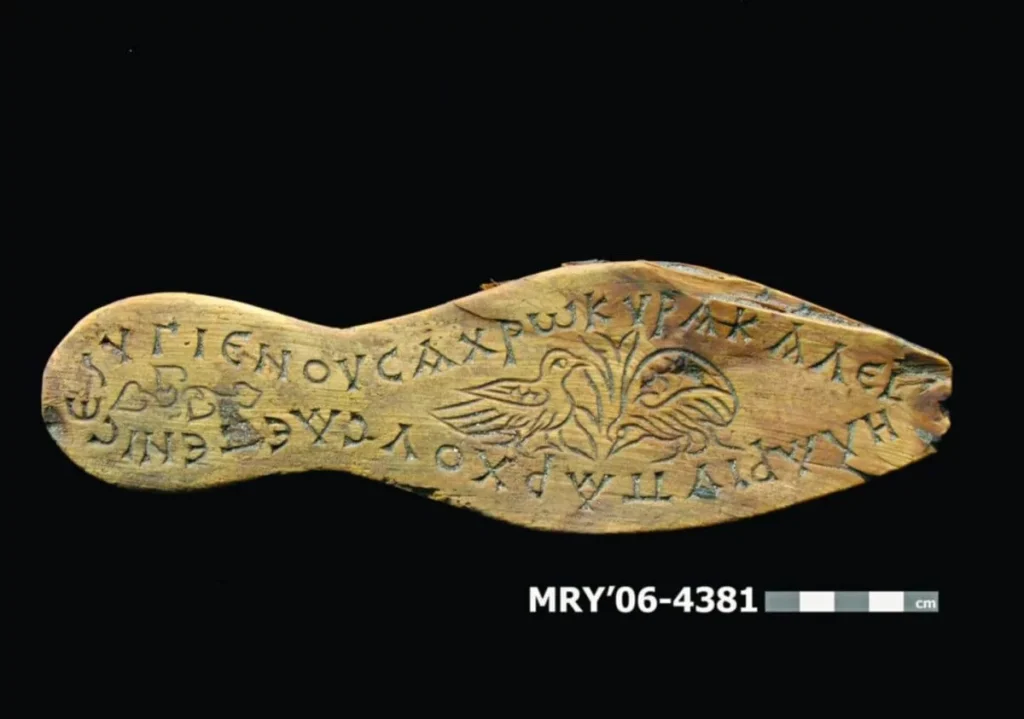
The excavation revealed an astonishing archaeological treasure. More than 60,000 artifacts were uncovered, including ancient shipwrecks, pottery, tools, coins, human remains, and even footprints believed to be around 8,500 years old. The site revealed traces from different civilizations that occupied the region long before modern Istanbul existed.
However, among all these discoveries, the sandals stood apart because they revealed something different. They did not simply tell researchers about trade, warfare, or political power. They revealed a human emotion.
The sandals are believed to have belonged to a Byzantine woman who lived during the period when Constantinople was the capital of the Eastern Roman Empire. The Byzantine Empire continued many traditions of ancient Rome after the western part of the empire collapsed. For centuries, Constantinople remained one of the richest and most influential cities in the world.
It was a center of commerce, religion, art, and culture. Merchants from across Europe, Asia, and the Mediterranean arrived at its ports. The streets were filled with people speaking different languages and carrying goods from distant lands.
Yet behind the grandeur of palaces and churches were millions of ordinary people whose daily lives are often harder for historians to reconstruct. The sandals offer a rare connection to these forgotten individuals.
The woman who wore them was likely not an empress or member of the imperial family. Archaeologists believe she may have been an ordinary citizen, possibly from a modest background. But the inscription shows that even people outside the highest levels of society cared about appearance, comfort, and personal expression.
Footwear in the Byzantine world could reveal social identity. Shoes were not only practical items used for walking. They could display wealth, taste, and status. Certain colors and materials were associated with specific groups. For example, some shades, such as imperial purple and certain red dyes, were strongly connected with the authority of emperors and the elite.
Women’s footwear, however, could be colorful, decorated, and carefully designed. Sandals might include patterns, dyed leather, embroidery, or symbolic elements. The newly discovered pair demonstrates that beauty was valued not only in grand public monuments but also in personal objects used every day.
The inscription makes the sandals even more unusual. It suggests that the person who created them wanted the wearer to receive a message every time she looked down at her feet. The words were not meant for crowds or future generations. They were meant for one individual.
Perhaps the sandals were a gift from someone who cared about her. Perhaps a craftsman added the phrase as a blessing for the owner. The exact story remains unknown, but the message has survived longer than anyone could have imagined.
Nearly 1,500 years later, the words still communicate the same simple wishes: health, beauty, and happiness.
This is what makes archaeology so powerful. Large monuments often dominate historical records, but small objects can reveal the most personal parts of human existence. A palace can tell us how rulers lived. A battlefield can tell us how armies fought. But a pair of sandals can tell us what someone hoped another person would feel.
The Marmaray excavation demonstrated that Istanbul is not just a modern city. Beneath its streets are countless layers of human experiences. Every object discovered represents a moment when someone touched, created, used, or valued something.
The sandals also remind researchers that ancient people were not so different from those today. They wanted to look good. They cared about loved ones. They expressed kindness through simple gestures. They left messages hoping for happiness and good fortune.
The Byzantine woman who wore these sandals probably never imagined that her shoes would survive for more than a thousand years beneath the city. She likely walked through markets, homes, and streets that no longer exist. She may have crossed paths with thousands of people whose names have disappeared from history.
Yet a small sentence carved into her footwear allowed a fragment of her life to return.
Today, these sandals are more than an archaeological artifact. They are a reminder that history is not only made by emperors, armies, and famous figures. It is also created by ordinary people whose small actions, emotions, and hopes sometimes survive against impossible odds.
Hidden beneath Istanbul, a forgotten woman left behind a message of kindness. After centuries of silence, her sandals finally spoke again.