The first honest conversation I had in years began with a woman whose real name I did not know. My name is Vaughn Kellerman, and from the outside, I was the man everyone expected me to be: successful, controlled, and surrounded by people who wanted access to my company, my influence, or my approval. I could walk through a ballroom filled with five hundred investors and journalists, smile at every person, answer every question, and reveal absolutely nothing. Eight months earlier, my business partner Stuart Page had tried to destroy me after I refused to approve a corrupt offshore contract. He left the company, took investors with him, and began whispering that I had become unstable. The company survived, but something inside me did not. One night, alone in my Toronto condo with hundreds of unread messages and no one I trusted enough to call, I opened an anonymous mental-health support app and pressed the button.

A woman answered and introduced herself as Rowan. She did not sound rehearsed or eager to fix me. She simply said she was listening. I told her I owned a company connecting millions of people and could not remember the last time I had spoken honestly to anyone. She replied, “That sounds exhausting.” No one had ever described my life that way. People called me brilliant, relentless, and intimidating, but she spoke as if exhaustion were something I was allowed to put down. I talked for forty minutes that first night and called again the next evening. Soon, our conversations became the only part of my day that felt real. I told her about growing up poor in Thunder Bay, about my father working himself into silence, and about the relationship I had lost because I had built a perfect life without ever learning how to live inside it. Rowan remembered everything. She listened without pity and asked questions that made me stop performing. Six weeks later, I asked whether I could take her for coffee. She gently refused, saying she did not want to complicate what we had built. I respected the boundary, but I could not stop wondering who she was.
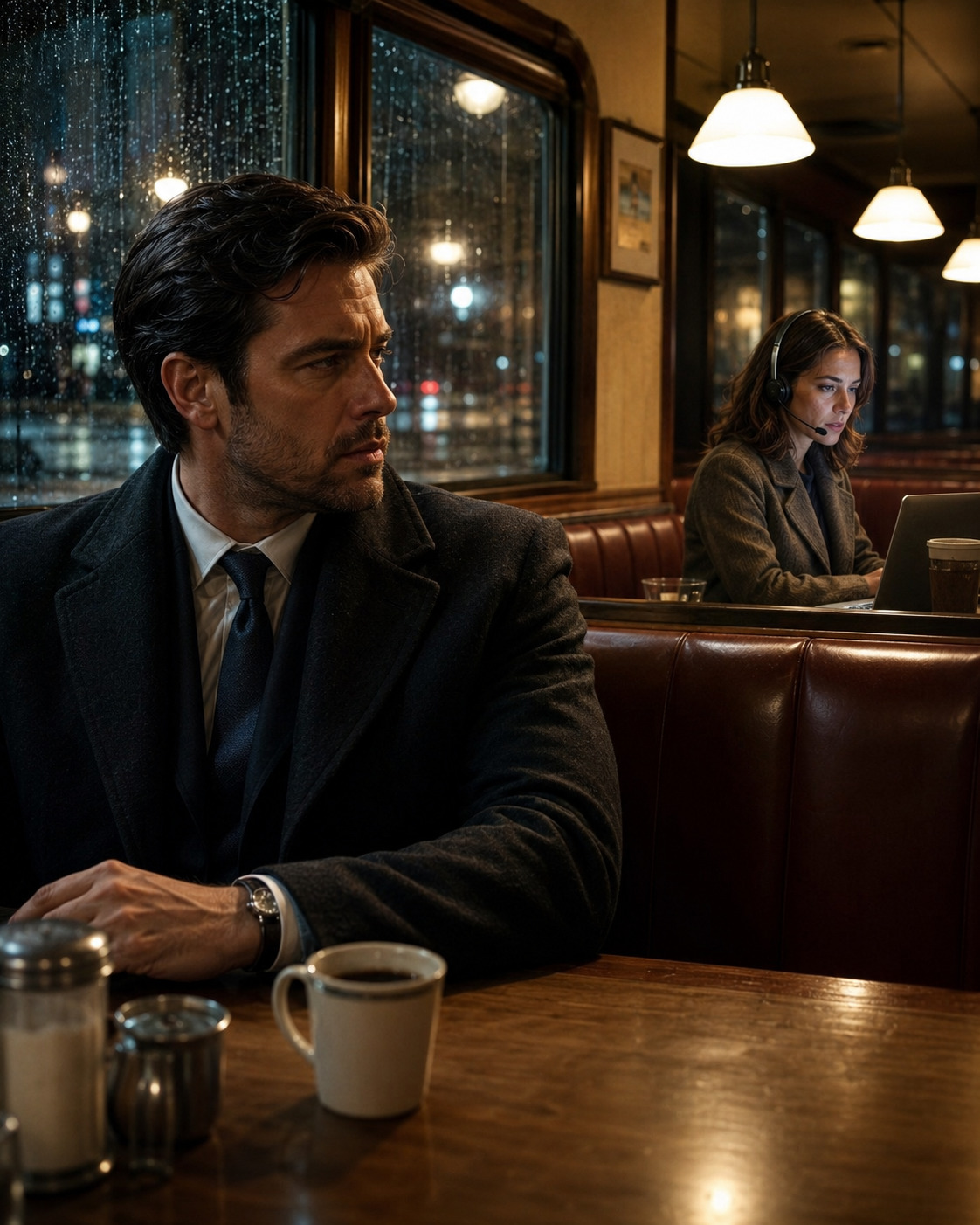
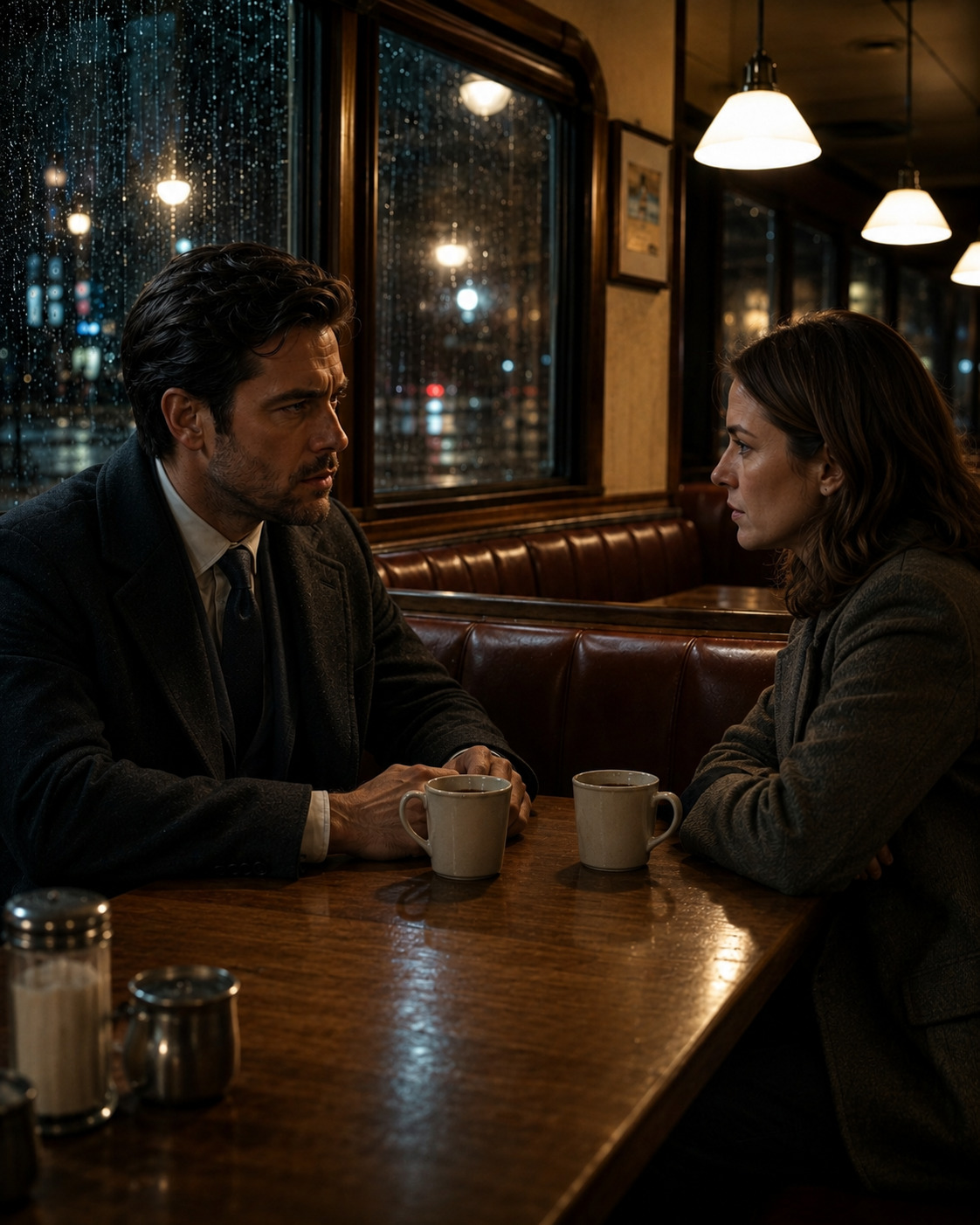
A few nights later, I entered a quiet diner near my building and heard her voice from the booth across the room. A tired woman in a worn winter coat sat behind an old laptop wearing a frayed call-center headset. She leaned toward the microphone and said, “I’m here. Take whatever time you need.” I knew that voice immediately. I left without approaching her, then returned the next night and the night after that. On the fourth evening, she looked up and recognized me. She closed her laptop, walked over, and sat across from me. Her real name was Iris Chadwick. Then she told me her maiden name.
Page.
She was Stuart’s younger sister.
Iris admitted she had recognized me during our second call. Stuart had spent years convincing her that she was unstable, oversensitive, and incapable of judging people accurately. He had used those lies to isolate her and influence a family court battle over her nine-year-old daughter, Clem. When I called the support line, Iris wanted to know whether Stuart’s version of me was true. At first, listening to me had been a way to test her instincts. But after the first week, she said, it stopped being about Stuart. I wanted to believe her, but betrayal had already become the language I understood best. I asked whether she had used me. She answered honestly: “Maybe at the beginning. Not after that.” I drove home alone and did not call her again.
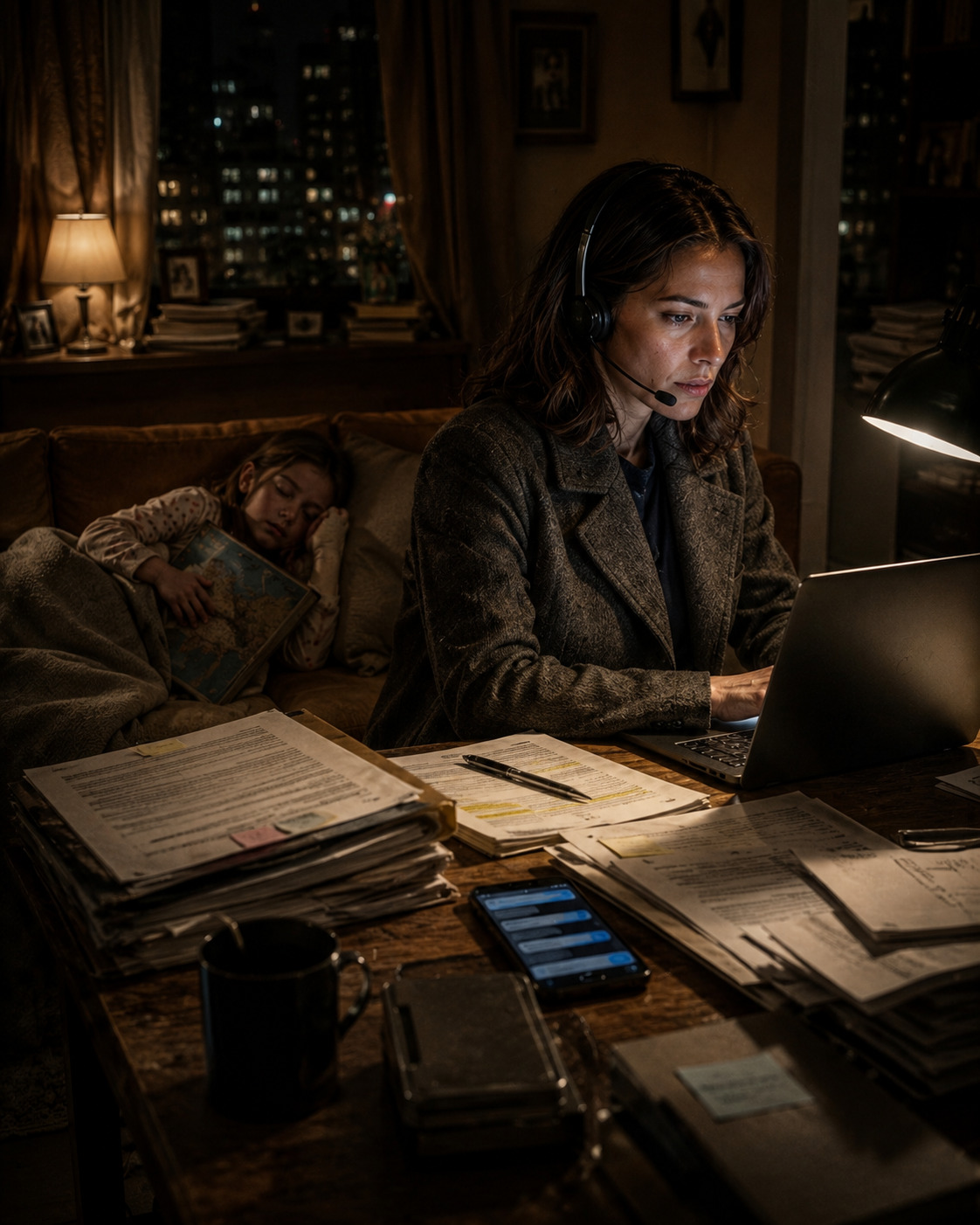
The next morning, a journalist contacted my office with an audio recording of my private calls. Every vulnerable thing I had told Iris was there: my panic, my grief, my loneliness, and the admission that I had spent my entire life becoming dependable so no one would ever have to check whether I was okay. Stuart was still a shareholder and planned to use the recording to prove I was mentally unfit to lead the company. I believed Iris had betrayed me, but four days later, my lawyer called with the truth. Iris had filed a formal complaint against Stuart. She documented years of emotional abuse, financial coercion, threats involving custody of Clem, and evidence that Stuart had illegally accessed the support platform’s servers to steal my recordings. Iris had given him nothing. She had risked everything to expose him.
The board ordered a forensic investigation, Stuart was removed, and the journalist abandoned the story after learning how the recordings had been obtained. By the end of the day, the company was safe, but Iris was gone. She stopped working at the diner and left only a letter for me. She apologized for not telling me who she was and explained that she had come forward regardless of whether it helped my company. Clem was finally living with her under a new court order. Iris wrote that her daughter loved maps, believed most dogs were trustworthy, and had become obsessed with a book about a girl building a raft. She ended the letter by telling me to take care of myself.
For once, I listened.
I restructured the board, promoted the people who had quietly carried the company while others took credit, and began seeing a therapist. I stopped treating vulnerability like a weakness that had to be managed. Months later, I spoke at a mental-health conference in Ottawa about the loneliness of leadership and the cost of pretending to be fine. After the event, I saw Iris standing near the hotel’s revolving doors. She looked tired, but peaceful, like someone who had fought a long battle and finally reached solid ground.
She walked toward me and said, “Hello, Vaughn.”
I asked how Clem was doing. Iris smiled and told me her daughter had finished the raft book and was now reading about a girl who became a lighthouse keeper. I asked whether the lighthouse keeper had a dog. “Not yet,” she said. “Clem is pushing for one.”
Then I asked the question I had wanted to ask months earlier.

“Can I take you for coffee?”
This time, she said yes.
We walked outside into the cold March air without trying to explain everything at once. There was no performance, no careful script, and no promise that the past had disappeared. There was only the quiet understanding that truth had cost both of us something, but had also brought us back to the same place.
For the first time in years, silence did not feel lonely.
It felt earned.