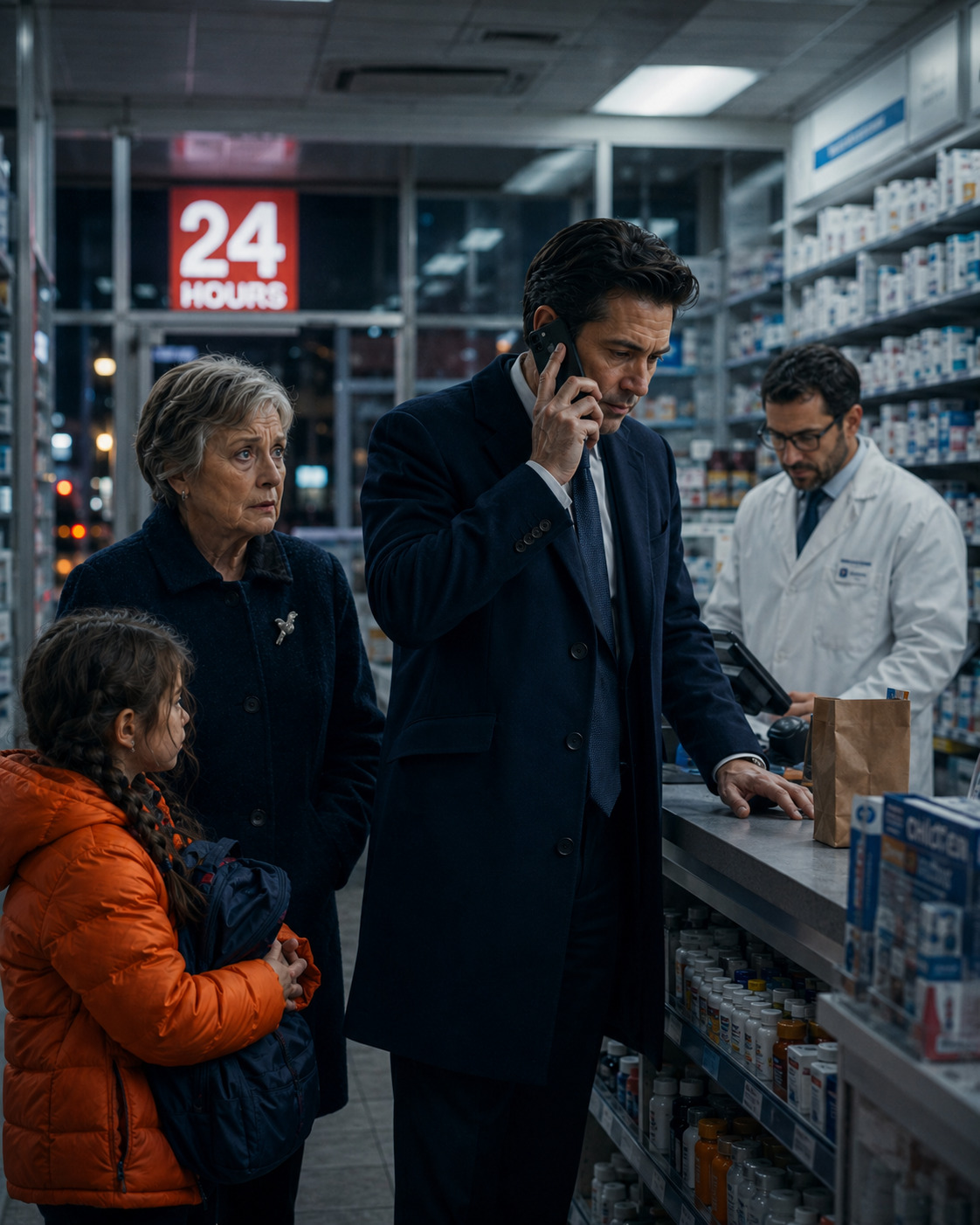
The question that changed my life came from a little girl sitting outside a pharmacy at 11:47 p.m. She wore an orange puffy jacket that was too large for her, her braids were half undone, and she hugged a small backpack against her chest as if it were the only thing keeping her steady. “Excuse me, sir,” she asked, looking directly at me. “Do you know how insurance works?” My name is Miles Harding, CEO of Meridian Health Group, and I had spent twenty-two years building a career around that exact question. I knew insurance better than almost anyone. I knew the formulas, the risk models, the contract language, and the cost-saving strategies. But standing there in the November cold outside a twenty-four-hour pharmacy in downtown Toronto, I suddenly realized I had never understood what insurance felt like to the people forced to depend on it.

The girl’s name was Penny. Her mother, Allison, was in the hospital, and her grandmother had been inside the pharmacy for almost an hour trying to buy medication Allison needed before she could be discharged. I followed Penny through the doors and found Dorothy Finn standing at the counter with her wallet open, staring at a prescription bag she could not afford to take home. The medication had been covered the previous month, but the insurance plan had renewed on November first and quietly moved the drug to a different tier. Dorothy now owed four hundred and twelve dollars. She had the money, but it was meant for the heating bill. The pharmacist explained the change gently, but the explanation did not make it less cruel. Dorothy looked at me when I admitted I worked in health insurance and asked, “Can you explain why a medication that worked last month is suddenly not covered simply because November started?” I knew the answer: formulary management, contract negotiations, and cost containment. I had approved frameworks that created outcomes just like this one. None of those words sounded acceptable at midnight beside a frightened child.
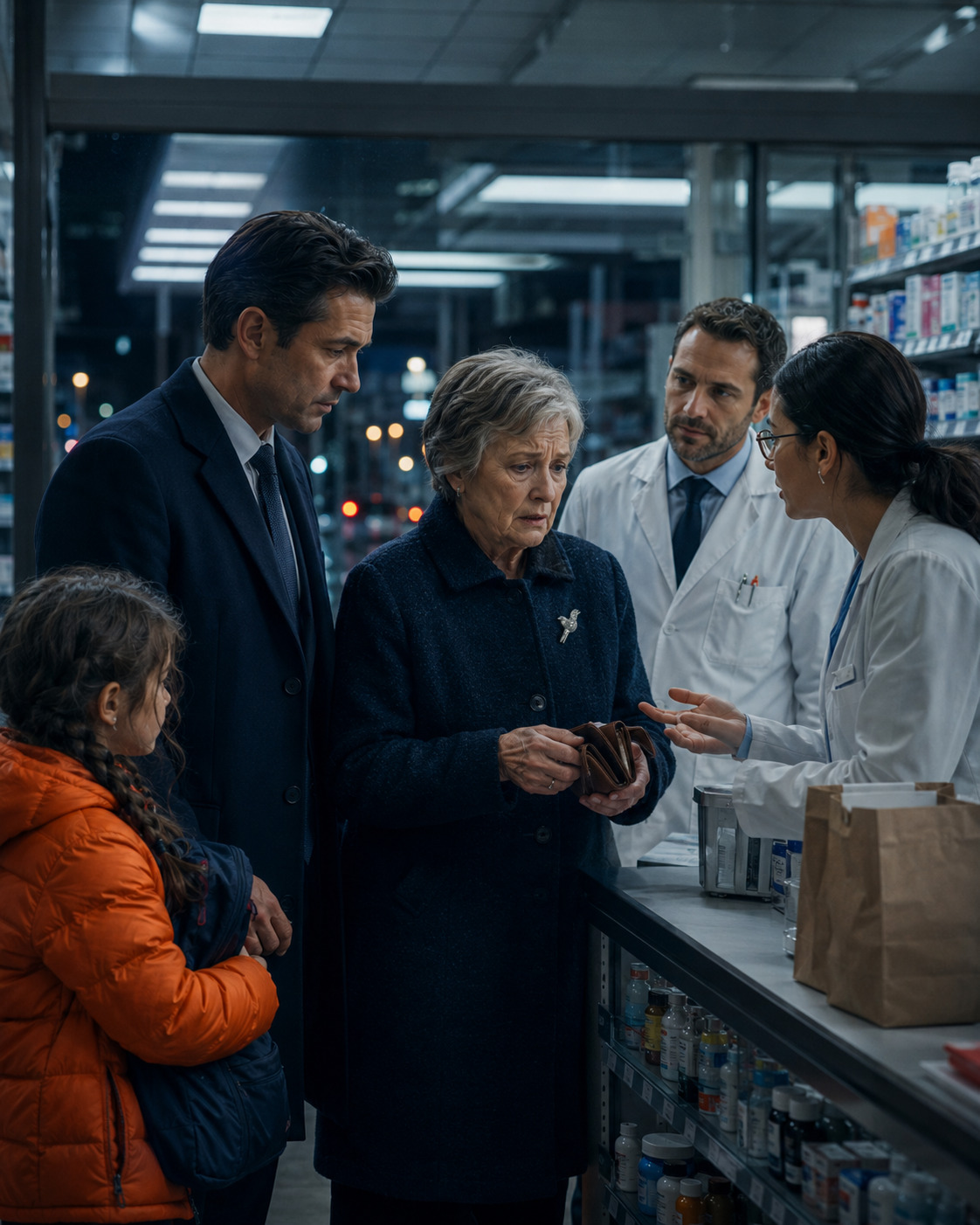
I called an internal executive line that had never been designed for people like Dorothy. Within eleven minutes, I reached someone who could expedite the authorization for the following morning. Then I paid the four hundred and twelve dollars myself so Allison’s medication could leave the pharmacy that night. It took less time than most meetings on my calendar. Dorothy thanked me, but when I apologized for how the system worked, she asked, “Are you?” There was no anger in her voice, only exhaustion. I told her I thought about it more than people in my position were supposed to admit. “That’s something,” she replied. “It’s not enough, but it’s something.” As the cab arrived, Penny turned back to me and asked, “Are you going to change how insurance works?” I crouched to her level and gave her the only honest answer I had. “I’m going to try harder than I have been.”
I returned to my hotel without the melatonin I had gone out to buy, but sleep was impossible anyway. I opened my laptop and reviewed Meridian’s own formulary changes from the latest renewal cycle. Forty-seven medications had been moved to less favorable coverage tiers. On a spreadsheet, the changes looked efficient. At a pharmacy counter, each line represented someone choosing between medicine, heat, rent, or food. I started writing, not a corporate memo, but a record of what I had seen: a silver bird brooch on Dorothy’s coat, Penny waiting outside because her grandmother did not want her to hear, and a prescription that became unaffordable because a date on the calendar changed. By four in the morning, I understood that knowing how a system worked was not the same as knowing whether it was right.
On the flight back to Calgary, I called our vice president of plan design and demanded a full human review of every recent formulary change. I did not want another cost-benefit report. I wanted to know whether members had actually received clear notification, whether they understood it, and whether anyone had examined what happened when coverage changed overnight. She warned me that the board would resist and ask for a financial rationale. “The rationale is that we are a health company,” I said. “Health is in the name.” It sounded obvious, but somewhere along the way we had allowed the numbers after that word to matter more than the word itself.
The review created exactly the conflict she predicted. Some executives argued that exceptions would increase costs and weaken negotiating power. I answered that efficiency without humanity was simply a cleaner form of neglect. We introduced advance medication-change notices written in plain language, emergency continuation coverage for hospitalized patients, and a rapid exception process that did not require families to spend days navigating telephone menus. The changes did not fix the entire system. I was not naive enough to believe one late-night encounter could undo decades of policy and profit. But it changed the part of the system I controlled, and that was where responsibility had to begin.

Months later, I received a letter from Dorothy. Allison was home, back with Penny and her younger son, Marcus. She was still receiving treatment, but the medication remained covered after the expedited review. Penny had included a drawing of three people outside a pharmacy: herself, Dorothy, and a tall man holding a briefcase. Above the man she had written, “Miles knows how insurance works now.”
I kept that drawing in my office, not because it made me feel heroic, but because it reminded me how close I had come to walking past her. For years, I had believed leadership meant understanding complex systems well enough to control them. Penny taught me something harder. Leadership also meant standing close enough to see who those systems were hurting, then refusing to look away.

I still could not promise her that I would change how all insurance worked. No one person could make that promise honestly. But every time a proposal reached my desk after that night, I stopped asking only how much it would save. I asked who would be standing at a pharmacy counter when those savings became real.
That question never fit neatly on a spreadsheet.
It was also the most important one I had ever learned to ask.