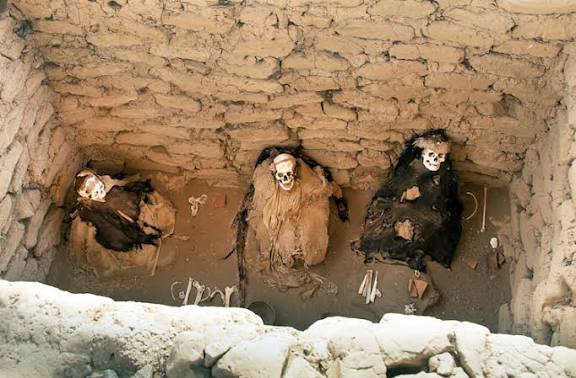
About 30 kilometers south of the city of Nazca, an ancient cemetery lies exposed beneath the fierce Peruvian sun. The site, known as Chauchilla Cemetery, contains mud-brick tombs, fragments of textiles and pottery, and human remains preserved with astonishing detail. Some still retain skin, clothing, and thick masses of hair more than a thousand years after burial. These visible remains have made Chauchilla one of Peru’s most haunting archaeological sites.
Photographs often describe the mummies as having “dreadlocks,” but that modern label can be misleading. The surviving hair may include braids, arranged locks, and strands that became matted during burial and centuries of exposure. Without detailed study of each individual, it is difficult to determine which styles were deliberately created during life and which resulted from natural preservation after death.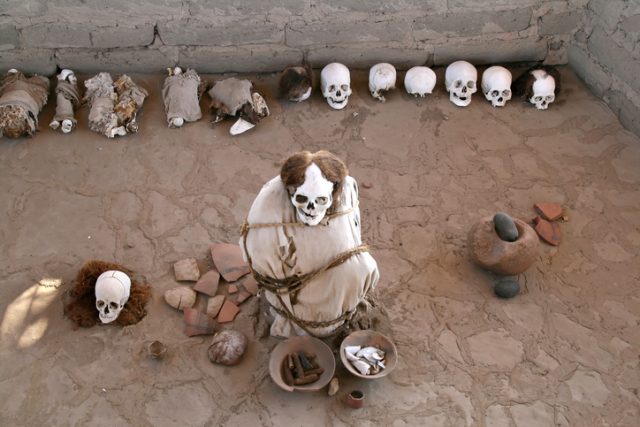
What is certain is that hair held remarkable importance in many ancient Andean societies. It could express identity, age, gender, status, community membership, or ritual meaning. At Chauchilla, the extraordinary survival of hairstyles allows archaeologists to observe an intimate part of appearance that normally disappears soon after burial.
The cemetery is generally associated with the Nazca cultural tradition and was used over several centuries, beginning around the second century AD and continuing until approximately the ninth century. The Nazca are best known internationally for the enormous geoglyphs drawn across the desert, but their society also produced complex textiles, painted ceramics, irrigation systems, and elaborate funerary customs.
Chauchilla reveals the human side of that civilization. Instead of distant lines viewed from the air, the cemetery preserves individual bodies, garments, hair, and burial spaces. The dead were often placed in seated or crouched positions inside purpose-built tombs. Textiles surrounded or covered the bodies, while grave goods may have accompanied them into the afterlife.
The remarkable preservation resulted partly from the severe dryness of the Nazca Desert. Moisture encourages bacteria, fungi, insects, and other organisms that break down human tissue. At Chauchilla, the arid soil and climate greatly slowed that process. Mud-brick tombs also helped limit dampness and outside contamination.
Funerary treatment may have contributed as well. Sources describing the cemetery note that bodies were wrapped in embroidered cotton and may have been treated with resinous materials that helped discourage insects and bacterial activity. The nearby archaeological site of Estaquería, where rows of wooden posts have been found, has also inspired theories that bodies may once have been dried before burial, although the complete process remains debated.
The preserved hair is especially striking because keratin can survive conditions that destroy softer tissues. In the right environment, it can retain color, length, texture, and evidence of grooming. Long hair found with the Chauchilla remains may therefore help researchers investigate how people cared for themselves and how families prepared the deceased.
The hairstyles may also reveal differences between individuals. Braiding requires time and skill and can communicate social meaning. Hair might have been arranged as part of ordinary life or carefully prepared during funeral rituals. It may also have been linked to ancestor worship, allowing the deceased to enter the spiritual world with a recognizable and dignified appearance.
Yet Chauchilla’s survival has been deeply troubled. The cemetery was rediscovered in modern times during the 1920s, but for decades it suffered extensive destruction by grave robbers known locally as huaqueros. Tombs were opened in search of ceramics, textiles, jewelry, and other valuable objects. Human bones and broken artifacts were left scattered across the desert after anything considered profitable had been removed.
This looting caused irreversible damage. Archaeology depends heavily on context—the exact relationship between a body, its clothing, offerings, tomb structure, and surrounding soil. Once objects are removed without documentation, researchers lose evidence that could explain the identity, beliefs, and history of the buried person.
In 1997, the site received legal protection, and many scattered bones and ceramic fragments were returned to reconstructed or restored tombs. Today, visitors can view a number of open burial chambers containing mummified remains in positions intended to represent their funerary context. Chauchilla is often described as one of the rare Peruvian archaeological locations where visitors can see mummies displayed within tomb settings at the original site.
That display creates ethical questions. These are not merely objects but the remains of people who once belonged to families and communities. Their exposed bodies attract tourism, yet they also deserve dignity and careful protection. Some scholars and visitors question whether displaying human remains outdoors turns ancestral burial into spectacle.
Responsible interpretation therefore matters. The long hair should not be used to invent unsupported stories about secret races, supernatural beings, or impossible civilizations. Its real archaeological importance is more subtle and more human. It shows that ancient people invested care in appearance and burial, and that the desert preserved details rarely available elsewhere.
Scientific study of the hair could potentially reveal additional information. Microscopic examination can identify grooming patterns, environmental damage, or traces of substances applied to the strands. Chemical and isotopic analysis may provide clues about diet, migration, and exposure to certain elements, although conclusions require well-documented samples and strict protection against contamination.
The textiles and tomb structures also help place the individuals within a broader cultural world. Nazca communities lived in a difficult environment where water, agriculture, and seasonal cycles were central to survival. Their religious art includes powerful supernatural imagery, animals, plants, trophy heads, and beings connected with fertility and natural forces.
Funeral practices likely reflected beliefs that death did not completely separate a person from the community. The carefully positioned bodies may have remained important as ancestors, linking the living with family memory, land, and sacred traditions. The preservation of the body—and perhaps especially the face and hair—may have helped maintain that identity.
Despite decades of excavation, tourism, and debate, Chauchilla still holds many unanswered questions. Archaeologists do not know the names of most individuals, their exact relationships, or every stage of the burial process. Looting destroyed much of the evidence before systematic research could document it.
Still, the cemetery continues to speak. Its message is carried not through inscriptions but through bodies, woven cloth, mud-brick chambers, and strands of hair that survived the passing of empires.
The so-called “long-dreadlocked mummies” are therefore not evidence of a sensational lost race. They are something more meaningful: ancient Peruvians whose appearance, burial traditions, and physical presence were preserved by an extraordinary desert environment.
More than a thousand years after their deaths, they remain seated beneath the Nazca sun. Their voices are gone, but their hair, textiles, and tombs preserve fragments of lives that history almost erased.