For most of my life, I believed success was measured by standards, numbers, and results. My name is Marcus Alderton, and I built the Ashgrove Grand into one of the most respected independent hotels in Canada. We had won awards, attracted wealthy guests from around the world, and built a reputation for excellence that other properties admired. From the outside, everything looked perfect. But over the previous six months, I had started noticing small signs that something inside the hotel was changing. Guest complaints were not dramatic, but they bothered me because they revealed something harder to measure. People were saying they felt unnoticed. One guest wrote that she could not explain why, but she did not feel welcome. That sentence stayed with me because I knew luxury was not about marble floors, expensive flowers, or beautiful rooms. It was about how people felt when they entered your space. So one morning, I made a decision that even my closest employees would never have expected. I took my father’s old work jacket from storage, put on his worn boots, left my phone and expensive watch behind, and walked into my own hotel as a stranger.
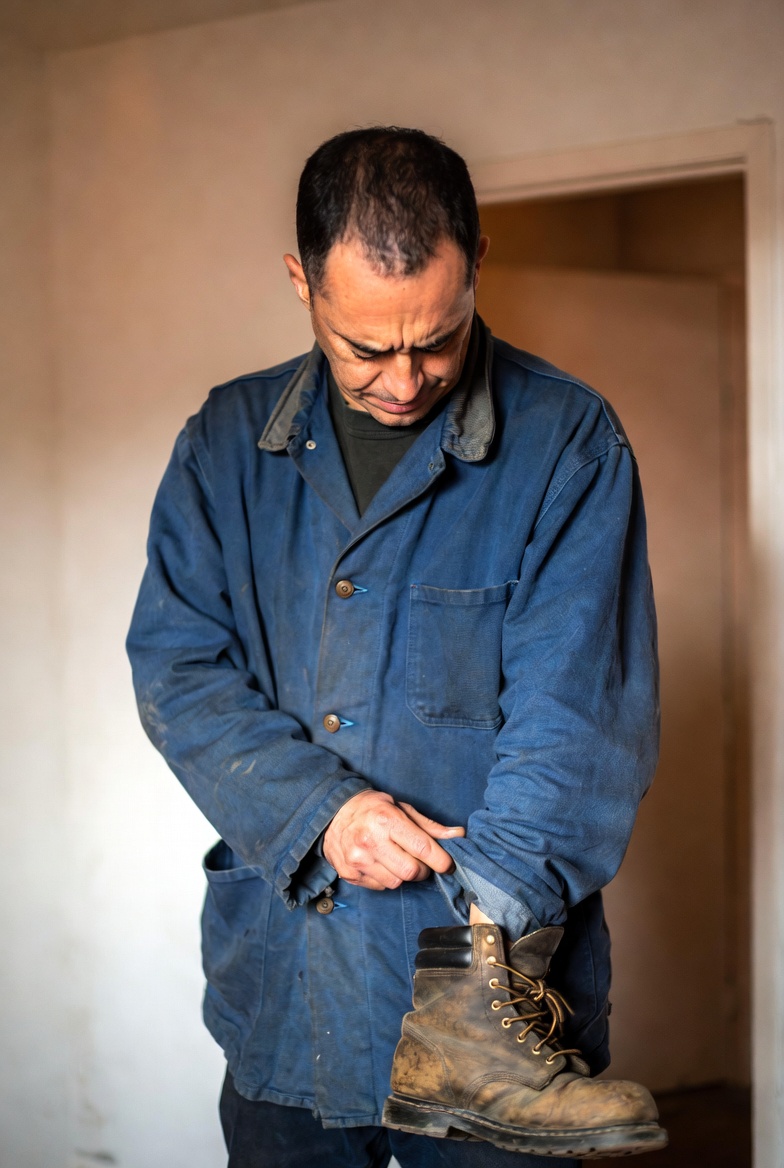
The jacket belonged to my father, Harold Alderton. He spent forty years working as a maintenance supervisor at a paper mill in Sault Ste. Marie. He never owned a suit, never attended luxury events, and never cared about impressing anyone. He was a man who believed that if something was broken, you fixed it. If someone needed help, you helped them. He died at sixty-two from a heart attack, still owing money on an old truck that I quietly paid off after his funeral. I was forty-one now, with a penthouse, expensive cars, and a business people admired, but that morning I wanted to remember the person who taught me what real work looked like. I parked two blocks away from the Ashgrove Grand and walked through the front entrance wearing a jacket that carried the smell of oil, sawdust, and a life spent working with his hands. The hotel looked exactly as I had designed it: beautiful, elegant, and carefully controlled. The marble floors reflected the lights, fresh flowers decorated the lobby, and a string quartet played near the fireplace. But standing there in my father’s old clothes, I noticed something I had ignored before. The hotel was designed to impress people, but was it designed to make everyone feel valued?
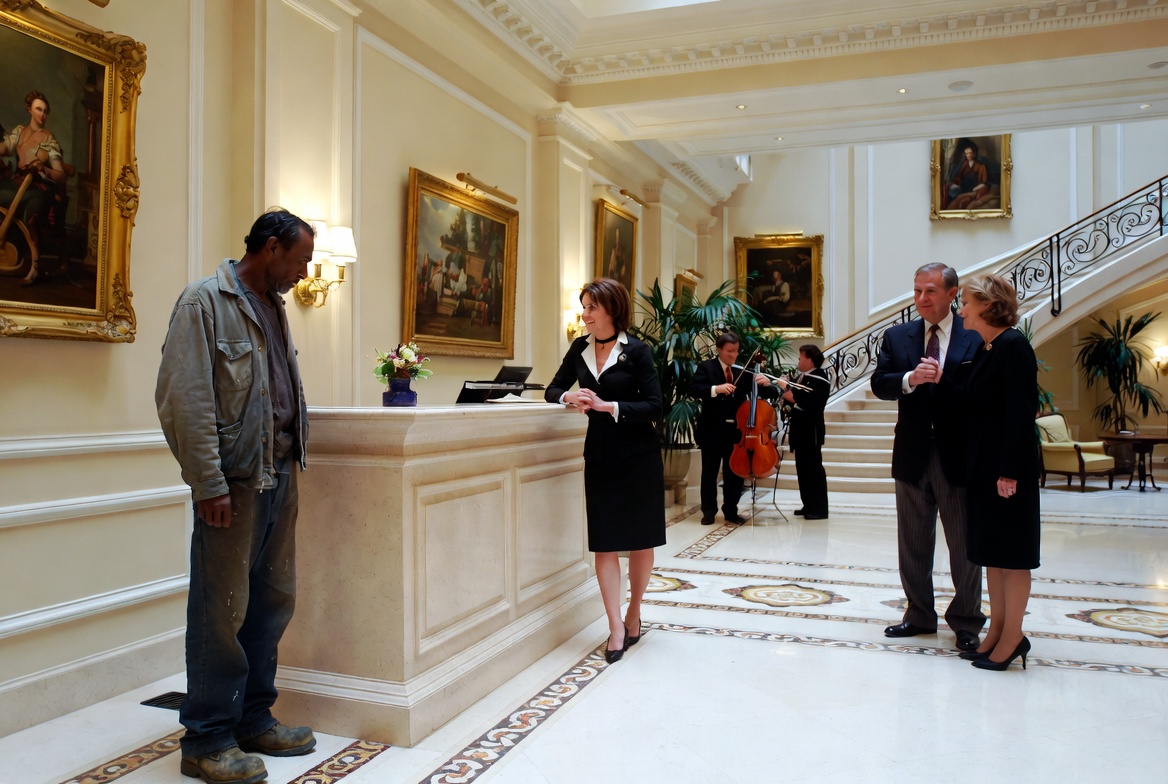
The first person I watched was Brianna, a concierge employee who had always received excellent reviews from wealthy guests. She looked at me when I entered and immediately made a judgment. I saw it happen in seconds. Her eyes moved from my old jacket to my worn boots, then to the guests walking behind me wearing expensive clothing. When a wealthy couple entered, her entire expression changed. She greeted them warmly, remembered their names, and treated them like they belonged there. I stood at the desk waiting for assistance, but after several minutes, I realized I was invisible. When I asked about the restaurant, she told me there were no available tables, even though I knew the lunch service was only partially booked. She was not openly rude. That was what made it more complicated. She was simply making decisions about who deserved attention. I walked away and sat near the fireplace, watching my own hotel from a perspective I had never experienced before. Then I saw a young woman enter carrying architectural drawings. Her portfolio slipped, papers scattered across the marble floor, and before anyone moved, I stood up and helped her collect them. She thanked me sincerely, not because she knew who I was, but because I had helped her when she needed it. That simple moment reminded me of something my father always understood: kindness does not need an audience.
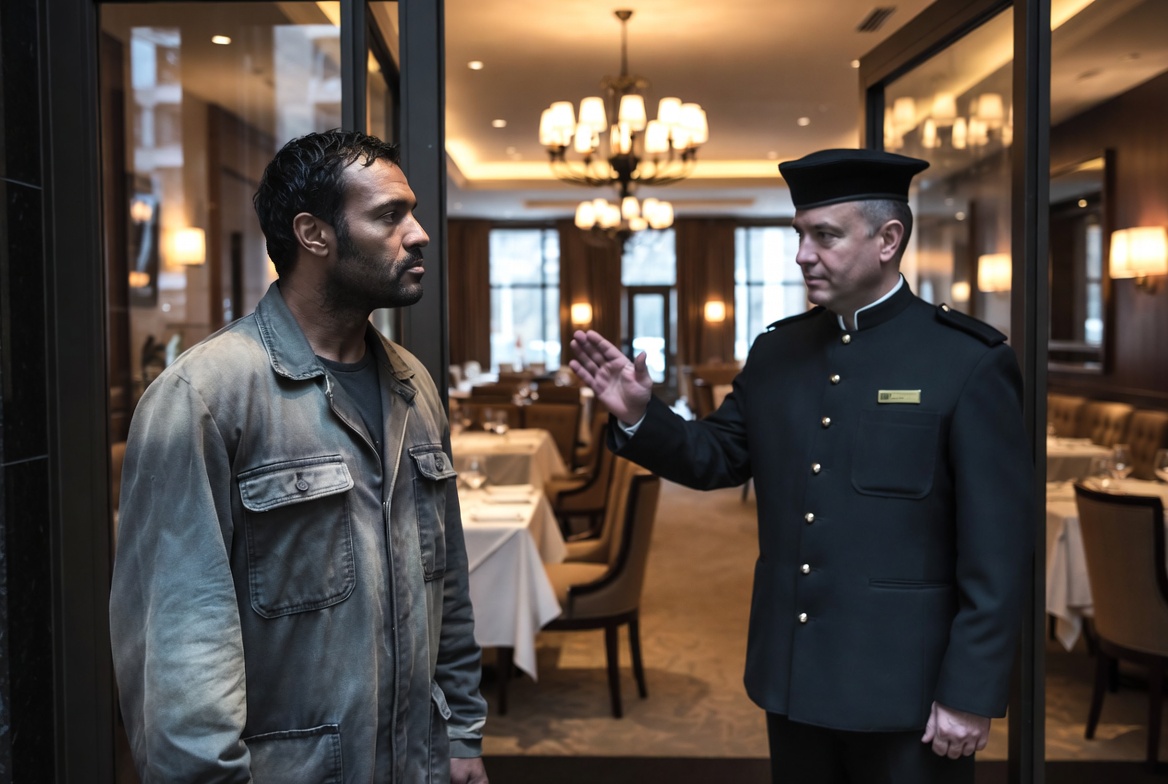
Later that afternoon, I tested another part of the hotel experience by trying to get lunch at my own restaurant. The host looked at my jacket, my appearance, and immediately decided I did not belong. He politely refused me a table, even though I could see empty seats inside. I returned to the lobby, not angry, but thoughtful. I was not discovering a single employee’s mistake. I was seeing a culture problem. Then Theodore Quan approached me. He was a young employee studying hospitality management, and I remembered seeing his name in our staff records. He was on break, without his name tag, and he spoke to me like a person instead of a customer category. He told me about a hidden chef’s counter that was not always advertised but was available for people who asked. He admitted that staff sometimes categorized guests without realizing it. He said there was no official rule, but people learned what behavior was rewarded. That sentence affected me more than he probably understood. The problem was not that employees were intentionally cruel. The problem was that the environment had taught them what mattered. Before he left, I introduced myself. When Theodore realized I was Marcus Alderton, the owner of the hotel, he was shocked. But I did not want to punish him. I wanted to understand him. He had done something simple that many people had forgotten how to do. He had noticed someone and helped.
That evening, I sat in my office with my operations director, Renata Blake, and explained everything I had seen. I did not want a quick solution or a dramatic punishment because I knew that would only create temporary fear. I wanted to change what people paid attention to. Brianna was placed on a performance improvement plan, but not as punishment. I wanted her to understand what had happened and decide whether she could change. When she later came to speak with me, she admitted something important. She said she had spent six years in hospitality learning to recognize which guests mattered most. She had been rewarded for that behavior because returning wealthy guests brought positive reviews. She never thought of it as cruelty. She thought of it as efficiency. That was the difficult truth. Many problems do not come from people believing they are doing something wrong. They come from people being trained to value the wrong things. I told her that she was talented, but talent needed direction. Some people adapt when culture changes, and some do not. Eventually, Brianna transferred to another property that was a better fit for her approach. We separated professionally and respectfully, but the experience reminded me that leadership was not about finding someone to blame. It was about understanding why something happened.
The person who influenced me most was Theodore. I created a guest experience mentorship program and invited him to be part of it. During one of our lunches, he asked a question that showed me why he deserved the opportunity. He asked what would happen to employees who were good at the old system but could not adapt to the new one. He was not trying to criticize me. He was asking whether we were being honest about change. That was exactly the question I needed to hear. He reminded me that culture could not be changed through a single announcement or a company memo. It had to be demonstrated repeatedly through actions. Over the following months, we changed how employees were evaluated. We focused less on appearances and more on genuine guest experiences. We created ways for staff members to share concerns without fear. We rewarded people who helped others, not just people who generated numbers. The hotel did not transform overnight. Real change rarely happens that way. But slowly, the atmosphere changed. Employees started noticing guests again instead of judging them.

The greatest lesson from that old jacket was not about my hotel. It was about me. I had spent years building a place where my father, a man who worked with his hands his entire life, might have felt uncomfortable. I had created something beautiful, but beauty without humanity means very little. My father never measured people by their clothes, their money, or their status. He measured them by how they treated others when nobody was watching. Wearing his jacket reminded me that I had built a successful business, but I needed to make sure I had built a meaningful one too. Years later, I still keep that jacket in my office closet. I do not display it because it is valuable. I keep it because it reminds me of the day I stopped looking at my company from the top and finally saw it from the ground. I thought I was testing my employees that morning. In reality, I was testing myself. I needed to know whether I had built something different from the world my father lived in, or whether I had simply created a more expensive version of the same thing. The answer is still complicated. But now, when people walk through the doors of the Ashgrove Grand, I want them to feel one thing before anything else: they belong.