For most of my life, I believed that success came from control. My name is Callum Breenidge, and I spent eleven years building Breenidge and Voss Capital into one of the most respected financial firms in Toronto. When I took over the company from my father at thirty-one, many people believed I was too young and too inexperienced. I spent the next decade proving them wrong through discipline, focus, and relentless determination. I became known as a man who never hesitated, never wasted time, and never allowed emotions to interfere with important decisions. I had a corner office overlooking the city, a driver, a reputation for being precise, and a company that many people admired. But there was one part of my life that remained unfinished. I had not truly spoken to my father in four years. His name was Kenneth Breenidge, and after suffering several strokes, he had moved into Ridgewood Care Home. I visited him regularly, but those visits had become empty routines. I sat beside him, asked the nurses about his health, watched him stare into silence, and then I left. I told myself that showing up was enough. I never admitted that I was only avoiding the harder truth: my father and I had spent years living in the same silence, and neither of us knew how to escape it.
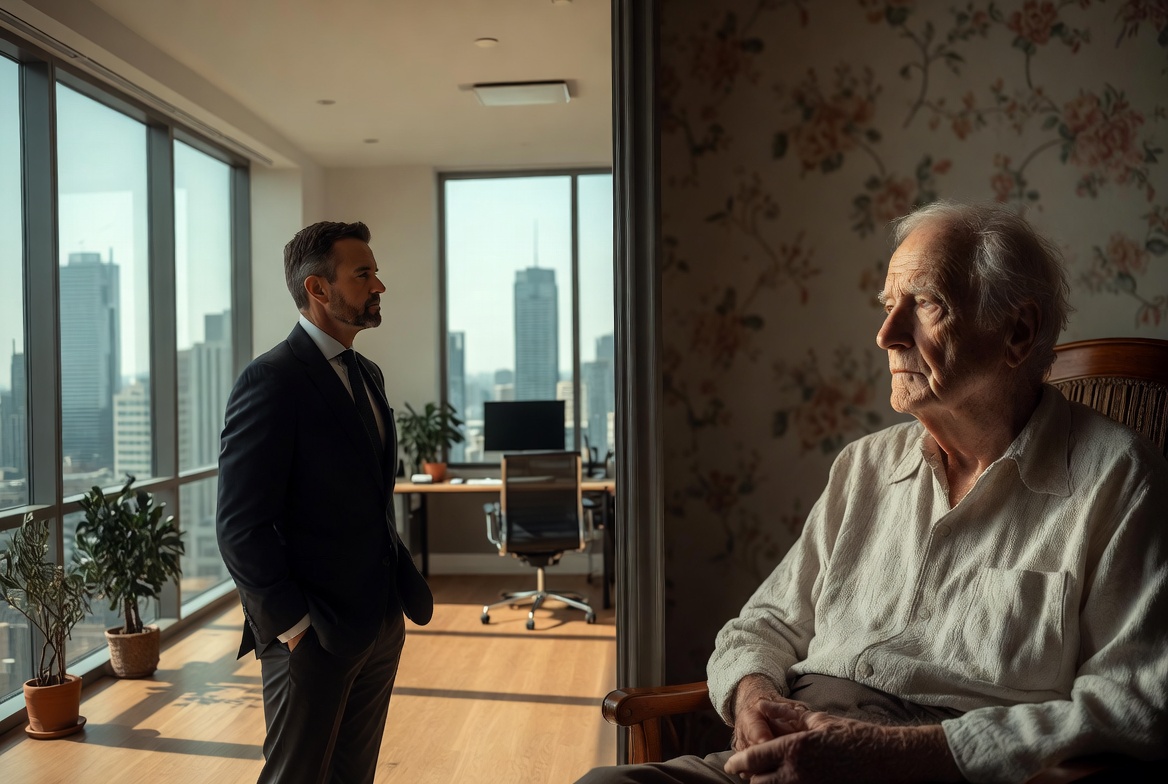
My father was never a man who expressed love through words. He believed love was something you proved through actions. He provided everything I needed growing up. Good schools, opportunities, stability, and a future. But affection was different. He rarely hugged me. He rarely told me he was proud of me. Instead, he showed his approval by making sure I had every tool necessary to succeed. After my mother died when I was seventeen, it was just the two of us. I learned to understand him through the things he did, not the things he said. I became ambitious because I believed achievement was the language he understood best. The last real conversation we had was about the company. I made a decision to bring outside partners into the firm, and he disagreed. The argument became bigger than business. We both said things that hurt each other, and then we did what people who are too similar often do. We waited for the other person to apologize first. Neither of us did. Then his strokes happened, and the opportunity to fix things became harder. The silence that had once been a choice became something neither of us knew how to break.
The person who changed everything was Abigail Frost. I first noticed her on an ordinary Tuesday afternoon at Ridgewood. I had arrived planning to stay only a few minutes because I had meetings waiting and a board presentation that needed my attention. I almost walked away before entering my father’s room. That moment stayed with me more than anything else because it showed me how easily I had almost chosen my schedule over my father again. Then I heard singing. It was quiet, gentle, and familiar. The melody stopped me because it was a song my mother used to hum on Sunday mornings when I was a child. I stood outside the door and listened. Inside, Abigail was sitting beside my father, one hand resting near his chair, simply being present. She was not forcing him to speak. She was not treating him like a patient who needed to be fixed. She was giving him something I had forgotten people needed: comfort without expectation. My father, who had spent months lost in confusion after his strokes, looked peaceful. I could not remember the last time I had seen him that way.
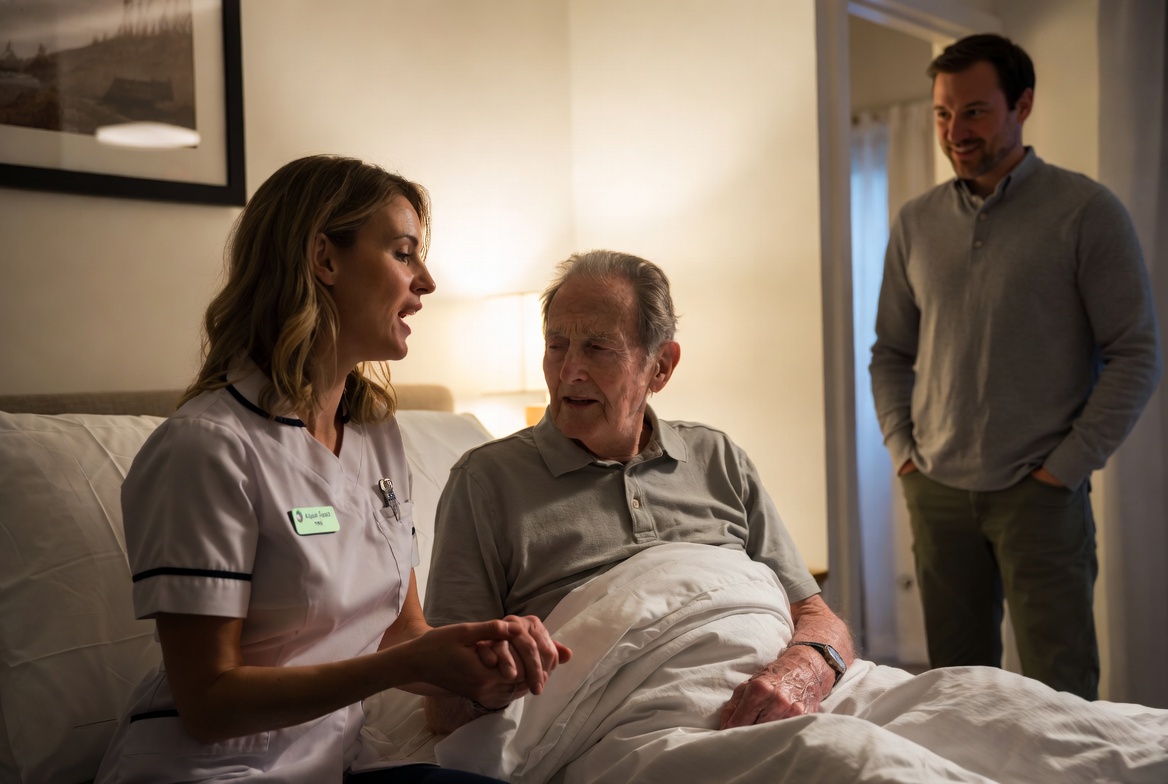
When the song ended, Abigail noticed me standing in the doorway. She did not react with fear or surprise. She simply introduced herself and explained that music helped calm my father when he became restless. She told me she had learned about music therapy, but she did not talk about it like a medical technique. She talked about it like an act of kindness. She called my father Kenneth instead of Mr. Breenidge, and that small detail affected me more than I expected. She saw him as a person before she saw his condition. Before I left, I asked about the song. She told me it was called “Harbor Lights,” a song her grandmother used to sing. I walked away that day thinking about her, but more importantly, I thought about the way she treated my father. She gave him patience and attention without needing recognition. For weeks afterward, I found myself returning to that moment. I thought about his hands becoming still while she sang. I thought about the smile she gave him even though he was asleep and could not see it. She was caring for someone because it mattered, not because anyone was watching.
I started visiting Ridgewood more often after that. At first, I told myself I was simply becoming more involved in my father’s care, but I eventually admitted there was more to it. Abigail made conversations feel different. She did not talk to me like a CEO. She did not care about my company, my reputation, or the things most people noticed first. She asked questions about my childhood, about my father before his illness, and about things I had never said out loud. I learned about her life too. She had once considered pursuing music before choosing nursing. She told me she loved helping people because every person carried a story that others could not see. Listening to her made me realize something uncomfortable. I had spent my entire life understanding people through results. Employees were measured by performance. Business partners were measured by value. Decisions were measured by outcomes. Abigail looked at people differently. She noticed their fears, their memories, and the small details that made them human. One afternoon, I overheard my father talking to her. He said he had always believed he needed to earn respect and that he never knew how to tell me he was already proud of me. I stood outside that room and realized we had both spent decades making the same mistake. We both thought love could exist without being spoken.
When I finally entered the room, I did not mention what I had heard. I simply said, “Hey, Dad.” He looked at me and smiled in a way I had not seen for years. We talked about simple things. Childhood memories. Old family trips. The house where I grew up. Nothing dramatic happened. There was no perfect apology that erased four years of distance. But something changed. We stopped waiting for the other person to make the first move. We started trying. After that, I found Abigail in the hallway and asked if she would have dinner with me. I told her it was not a thank-you or a professional gesture. I wanted to know her outside the walls of Ridgewood. She smiled and agreed. For the first time in years, I allowed myself to do something without calculating the outcome. I allowed myself to simply be present. I began understanding that some of the most important moments in life cannot be planned, measured, or controlled. They happen when you finally stop protecting yourself from them.

Looking back now, I realize Abigail did not save my father. She helped me see him again. She reminded me that beneath illness, pride, success, and years of silence, people are still people. My father was still my father. I was still his son. We had lost time, but we had not lost everything. I still run my company. I still make difficult decisions. I still believe discipline and responsibility matter. But I no longer believe strength means hiding every emotion and carrying every burden alone. Abigail taught me that care is not weakness, patience is not wasted time, and sometimes the people who enter our lives quietly are the ones who change everything. A woman who simply sang to an old man in a care home helped repair a relationship I thought was beyond saving. She reminded me that it is never too late to say what matters, never too late to listen, and never too late to find your way back to the people you love.